Published April 24, 2026 07:01AM
Three Plant-Based Supplements May Make Heat Training Easier, According to New Research
New research suggests that taking these may make heat training more tolerable.
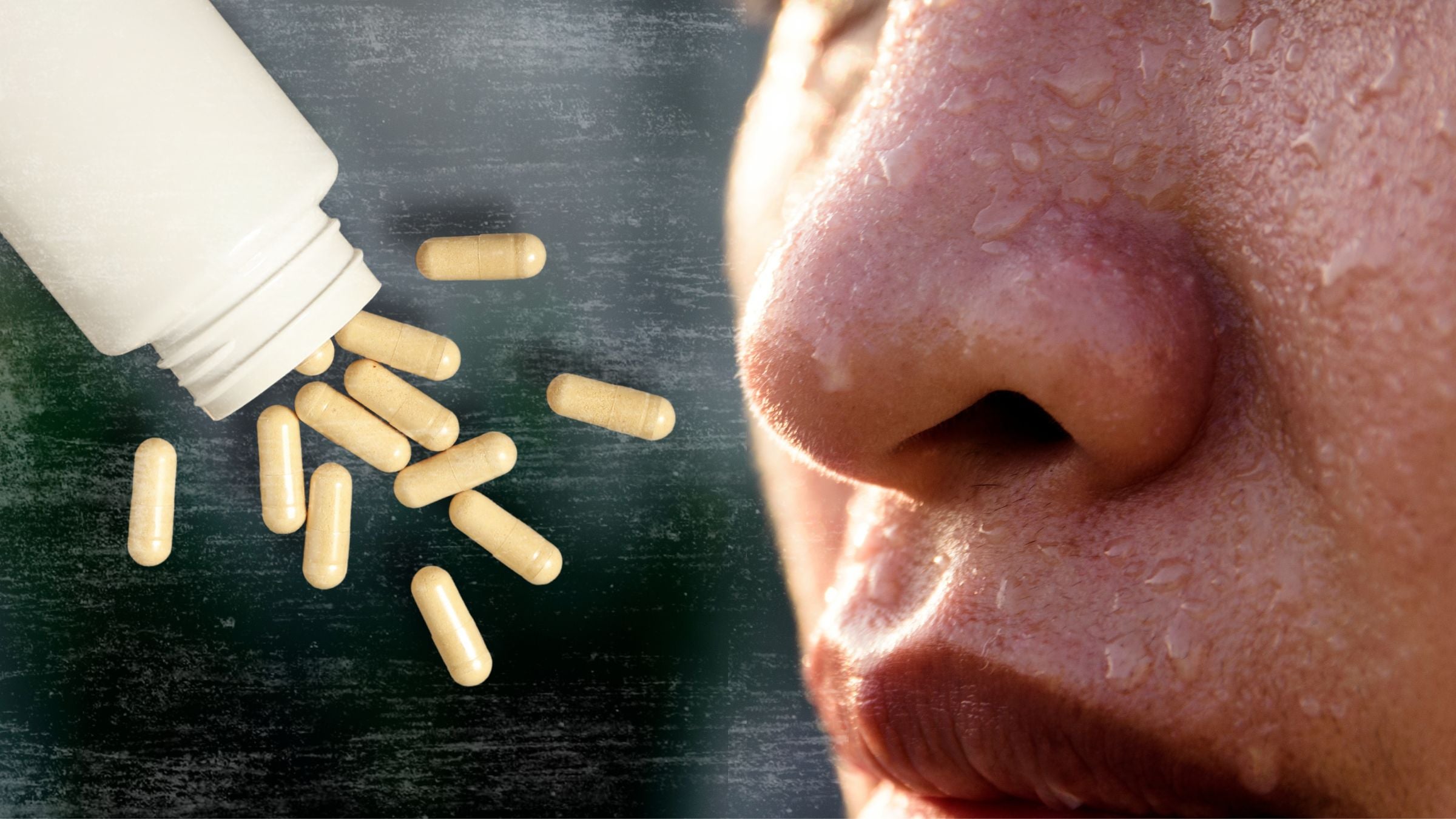
(Photo: Ayana Underwood/Canva)
Key takeaways: New research suggests that three supplements, berberine, curcumin, and blackcurrant, may make training in the heat more tolerable. While they cannot replace traditional hydration methods, they could reduce the strain of exercising in hotter temperatures.
It can be difficult to pull off a productive outdoor workout in the warmer months, given the heat’s potential impact on your performance. While staying well hydrated is a must, new research presented at the American Physiology Summit (which is held from April 23 to April 26 in Minneapolis, Minnesota), finds that certain supplements may help you better tolerate high temperatures.
The research, titled the “Integrated Effects of Berberine, Curcumin and New Zealand Blackcurrant on Physiological, Perceptual and Gastrointestinal Responses During Exercise Heat Stress,” suggested that berberine, curcumin, and blackcurrant supplements helped people exercise more comfortably and efficiently in the heat.
There’s been a growing interest in the medical community to look for ways to combat exercise-induced heat stress, according to Matthew Kuennen, a researcher involved in the study and associate professor in the Department of Health and Human Performance at High Point University. “Dietary supplements are particularly attractive,” he says, noting that they’re easy to use, can be given over a short amount of time, and tend to be tolerated well by users.
These supplements may seem random, but the findings are worth considering for outdoor enthusiasts. Here’s why.
ADVERTISEMENT
How Researchers Tested Supplements’ Impact on Body Heat Regulation
Kuennen and his research team conducted double‑blind, placebo‑controlled trials to test the potential impact of each supplement on participants subjected to an exercise challenge. The study participants each performed a 60-minute treadmill run at 60 to 70 percent of VO2 max in a hot (93 to 98.6 degrees Fahrenheit) environment.
Before each trial, participants took one of the following supplements: berberine for seven days, curcumin for three days, or blackcurrant extract for seven days. The participants’ body temperatures, cardiometabolic data, and heat perceptions were recorded.
ADVERTISEMENT
The researchers also analyzed the participants’ blood and urine to assess changes in the function of their gastrointestinal barrier, as well as inflammatory markers (which indicate whether or not there is inflammation in the body).
After analyzing the data, the researchers found that all three supplements reduced the increase in body temperature during exercise. People who took berberine and curcumin had heart rates that were lower by three to eight beats per minute.
Berberine was associated with a reduction in perceived workout intensity for participants, while curcumin and blackcurrant were linked to improved gastrointestinal barrier function and reduced inflammation.
It’s important to note that the study merely found a link between these supplements and better outcomes while working out in the heat—it didn’t prove that the supplements on their own caused those outcomes.
ADVERTISEMENT
These 3 Supplements May Be Helpful When Exercising in the Heat for a Few Reasons
According to Kuennen, these supplements were linked to how hard workouts felt, while others were better at keeping heart rate lower. Here’s what may be behind their benefits.
1. Berberine
This plant substance may help the metabolism run more efficiently, says Albert Matheny, a sports nutritionist, personal trainer, and the co-founder of SoHo Strength Lab, a private training practice located in Manhattan, New York. “If you are more metabolically efficient, you are going to lower your heat stress,” he says.
Some evidence suggests that it can lower your heart rate by about five to ten beats per minute when you work out while taking berberine, says Scott Keatley, a registered dietitian and co-owner of Keatley Medical Nutrition Therapy, a nutrition practice based in New York. When you combine that with a more efficient metabolism, it may slightly help to keep your body temperature down, he adds.
ADVERTISEMENT
2. Curcumin
Curcumin, the main active compound in turmeric, has an anti-inflammatory effect on the body, Matheny says. “It may help maintain gut barrier integrity under stress,” Keatley says. “In theory, reducing systemic inflammation could slightly reduce physiological strain in the heat, but the effect size is still going to be very small.”
3. Blackcurrant
This berry extract is rich in anthocyanins, which can help to support your blood vessel function and blood flow, Matheny explains. When your blood vessels can expand more easily, your body is able to get rid of heat more efficiently, Keatley says.
ADVERTISEMENT
It’s important to keep the findings in perspective, though, according to Keatley. “These were small, controlled lab studies looking at indirect signals like heart rate and inflammation, not real-world outcomes like performance or heat illness,” he says.
Is There a Specific Dosage You Should Take?
Kuennen recommends these doses based on the findings:
- Berberine: 1.5 grams a day for a week
- Curcumin: 500 milligrams a day for three days
- Blackcurrant: 600 milligrams a day for a week
It’s best to take curcumin and berberine with food to increase their absorption and availability in the body, Kuennen says.
“I would not recommend using these supplements full time,” Kuennen says. “Rather, I would suggest using them, at the outlined dosages, in the week prior to a major competition or event.”
ADVERTISEMENT
Can Supplements Replace Regular Hydration Methods?
When it comes to managing heat during a workout, experts agree that being well hydrated remains the most crucial factor. “You can take all of this stuff [the supplements], but if you’re not hydrated, it’s not going to work,” Matheny says.
Keatley agrees. “Hydration directly affects plasma volume, sweat rate, and the body’s ability to dissipate heat,” he says. “These supplements, at best, slightly reduce physiological strain under heat stress.”
ADVERTISEMENT
Kuennen echoes that. “There is no substitution for hydrating well,” he says. But Kuennen says these supplements are worth considering if you don’t have enough time to get used to hotter temperatures before a workout or competition. (He lists off starting a new training routine in the heat or having sudden heat exposure from travel or a big change in temperature in your area as examples.)
“It is really important that dietary supplements be viewed as adjuncts, rather than replacements, for established heat illness countermeasures,” Kuennen says.
Want more Outside health stories? Sign up for the Bodywork newsletter.
