Updated February 14, 2025 11:49PM
5 Common Misconceptions About Lower Back Pain, According to a Physical Therapist
You may want to reframe how you think about that discomfort

(Photo: PeopleImages/Getty)
Lower back pain can feel neverending—and impossible to fix. As one of the most common orthopedic injuries, there’s an overwhelming number of treatment options. Oftentimes, unnecessary surgeries and injections promise you some relief from your discomfort. However, unfortunately, like most injuries, there’s no magic solution.
5 Common Misconceptions About Lower Back Pain
Managing lower back pain is specific to each individual experiencing it. It’s about finding the right formula of movements, modifications, and treatments that work for you. However, before you start to craft a plan of relief, it’s critical to acknowledge some of the most common misconceptions surrounding lower back pain.
1. Lower back pain is completely normal
Society normalizes something that is not typical but rather a common occurrence. More than 85 percent of people will be affected by lower back pain in their lifetime. However, while this is a familiar experience, it does not mean it should be the standard expectation.
Pain, especially chronic pain, is the body’s way of telling us something is wrong. However, instead of listening to these signals and adjusting our routines accordingly, we often ignore them and continue to push through the discomfort.
ADVERTISEMENT
For example, lower back pain could be your body’s way of telling you it needs more stability, movement, or mobility. It could also be an indication that you have muscular imbalances and weaknesses.
2. Most cases of lower back pain are caused by one thing
There’s typically never just one culprit behind your lower back pain. For example, your range of motion, mobility, strength, and joint health could all be reasons why you’re feeling some discomfort.
It also extends beyond physical factors. Your job, stress levels, nutrition, and sleep habits can all contribute to your musculoskeletal health. That’s why it’s critical to make sure you’re receiving individualized treatment for your pain.
3. Lower back pain often requires surgery and invasive treatments
After throwing your back out or twisting the wrong way, you may be in a large amount of pain—and have the urge to rush to the hospital. And while there’s no denying your discomfort, you can likely treat your injury with more conservative methods. More than 90 percent of acute back pain cases are non-emergent, which means they don’t require surgery.
ADVERTISEMENT
4. When you have lower back pain, it’s best to limit activity
Our bodies are meant to move and be active—yes, even when we’re in pain. Rest is not the same as rehabilitation. This doesn’t mean you should run a marathon or go for a FKT when you’re injured, but rather try to find modified ways to integrate movement into your day. By staying mobile, you’ll help promote blood flow to your back, aiding in the healing process of your injury.
For example, instead of sitting on the couch and watching another episode on Netflix, look for easy ways to move. Even the smallest amount of activity is better than nothing. You could go for a 5-minute walk, practice some modified stretches, or work on deep core activation through breathwork. A professional, such as a physical therapist, can suggest movements and exercises that will work best for your injury and pain tolerance.
5. “Degeneration” is predictive of lower back pain
Just as you may see signs of aging on the outside of your body, degeneration within the spine is completely normal—and even expected. (One of my former college professors referred to this process as our “wrinkles on the inside.”)
ADVERTISEMENT
The presence of typical aging processes in your spine is not necessarily a determinant of future back pain. Many over the age of 30 will show some signs of aging if you take an X-ray of their spine. But most 30-year-olds are not walking around with debilitating back pain. Changes within your musculoskeletal system are a normal part of life. There are many lifestyle, genetic, and physical factors outside of an imagining report that dictate how you can or will experience pain and discomfort.
4 Stretches for Lower Back Pain
Your treatment plan for your lower back pain should be specific to your lifestyle and individual needs. However, there are several stretches that can help support the health of your lower back and spine. Practice these exercises a few times a week for the best results.
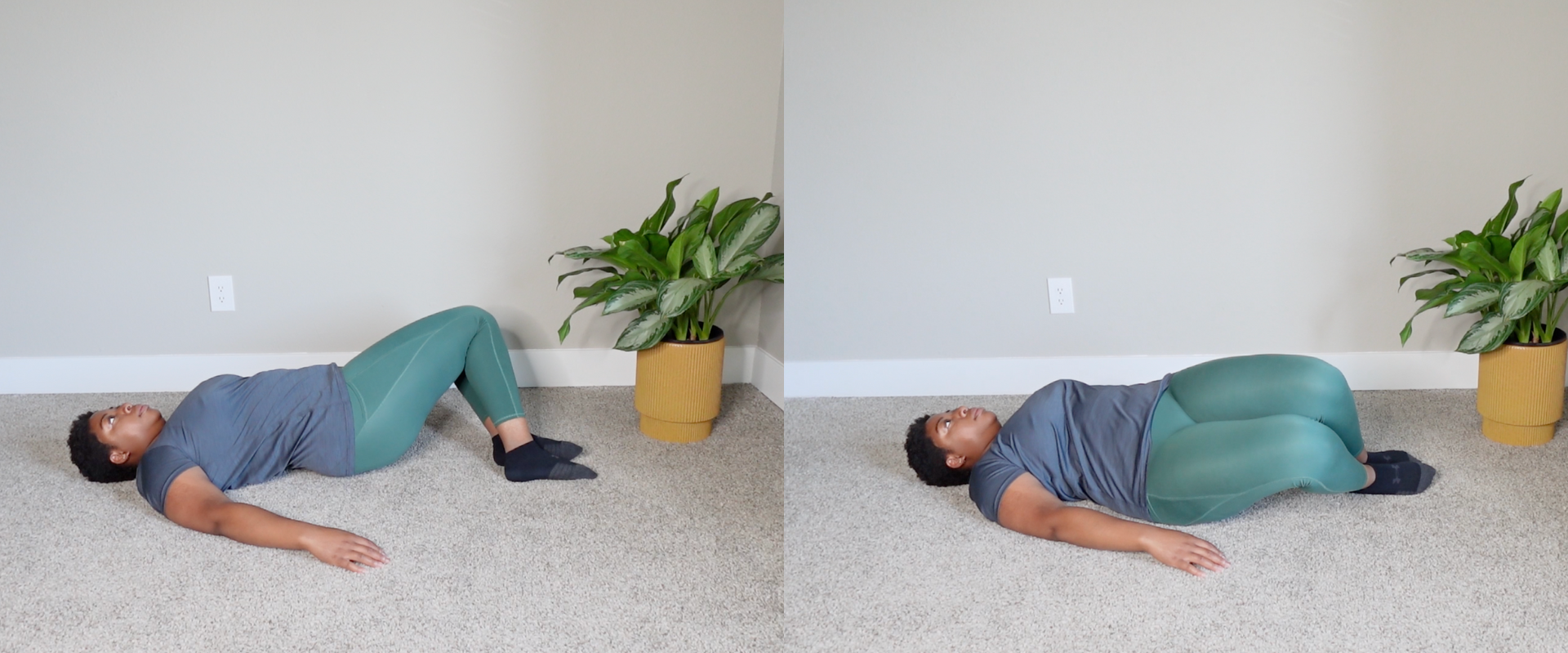
1. Lower Trunk Rotations
- Start by lying on a flat surface with your knees bent. Slowly lower your knees down to one side of your body in a windshield-wiper motion. Continue this motion, alternating sides.
- As you lower your legs to the left, you should feel the stretch on the right side of your lower back and hips. The same sensation should occur on the left side of your body when you lower down to the right.
- Move slowly between the two sides, holding the position on each for 5 to 10 seconds.
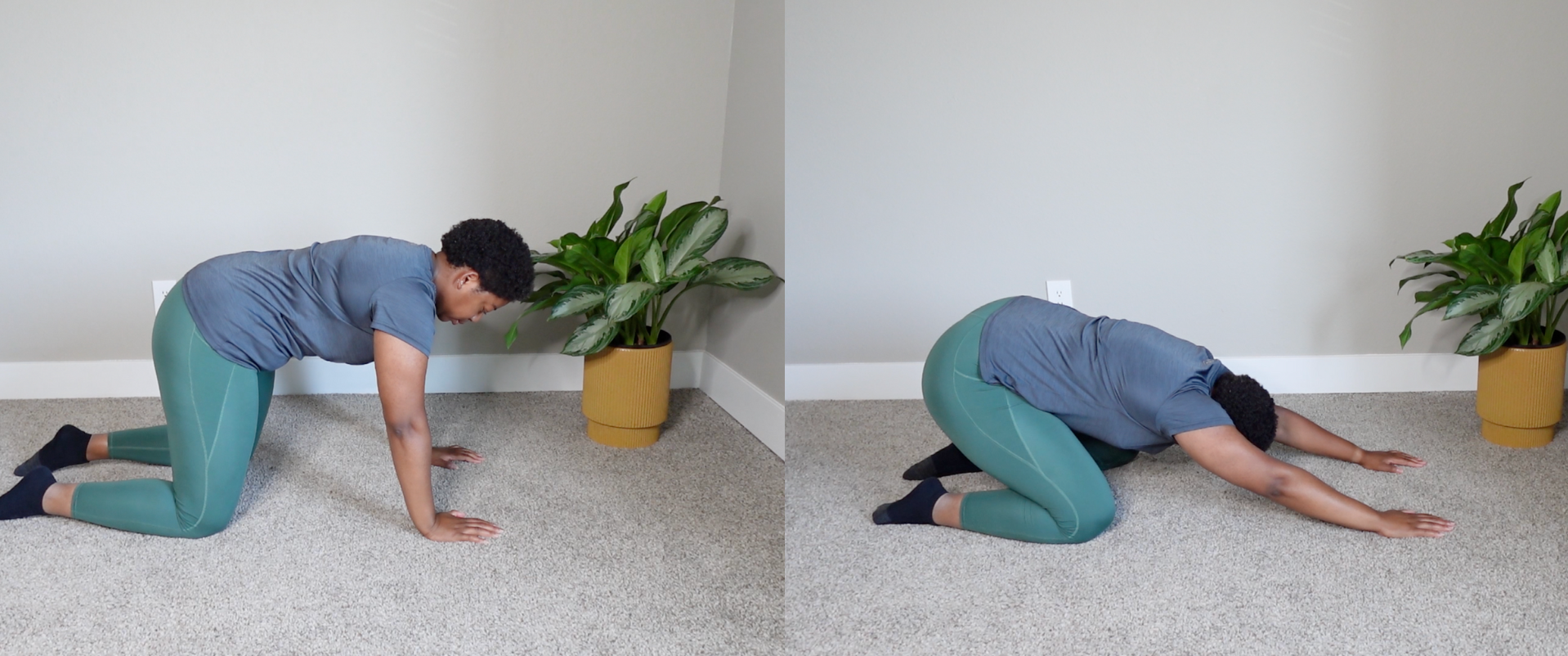
2. Child’s Pose
- In addition to being a restorative posture in yoga, Child’s Pose is also a great stretch for your lower back.
- Begin on your hands and knees in a tabletop position. Slowly sit your hips back while simultaneously stretching your arms straight out in front of you.
- Hold this position for 10 to 30 seconds, depending on your personal comfort level.
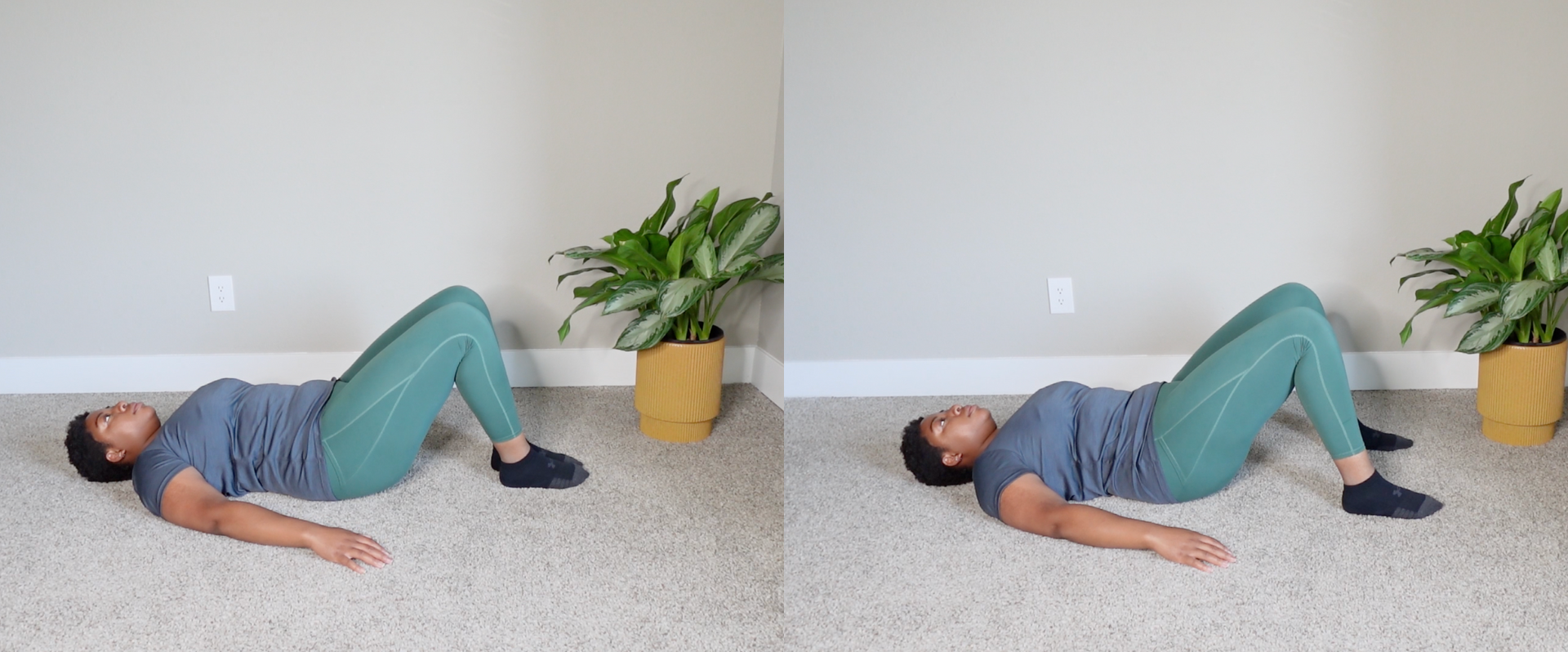
3. Posterior Pelvic Tilts
- Posterior pelvic tilts help to activate the deep core muscles that support your lower back.
- It’s a subtle movement, so you will not see much motion when practicing these. However, that doesn’t mean they’re ineffective.
- Start by lying on a flat surface with your knees bent. Separate your feet hip-distance apart. Tucking your pelvis, rock your hips backward toward your head, flattening your lower back against the floor. Avoid straining or holding your breath.
- Perform 2 sets of 10 reps, holding each rep for at least 3 seconds.
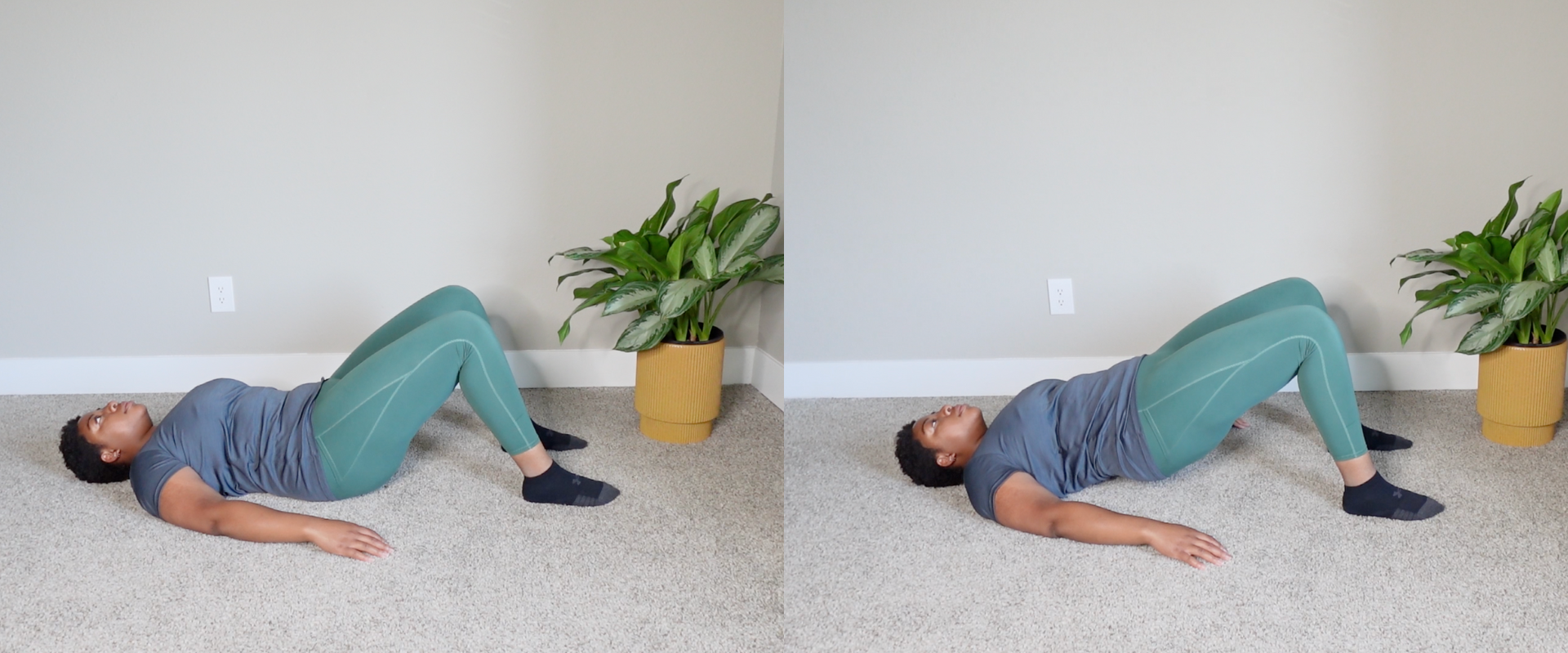
4. Bridges
- This movement strengthens your glute muscles, which help support your lower back.
- Begin by lying on a flat surface with your knees bent. Move into a posterior pelvic tilt position, as you did in the previous exercise. Slowly lift your hips up. Hold for 2 seconds. Avoid arching your lower back.
- Lower your hips back down to the ground and repeat.
- Perform 2 sets of 10 reps.
Britni Barber is a physical therapist, certified pain-free performance specialist, and strength coach in Denver, Colorado.