Updated April 21, 2026 02:58PM
Hospital Visits for Tick Bites Are Up 77 Percent Since 2017 Across the United States. Here's How to Protect Yourself on Outdoor Adventures.
The number of tick-related hospital visits is the highest they've ever been since 2017. Here are the regions most impacted and the best expert-backed ways to protect yourself this tick season.
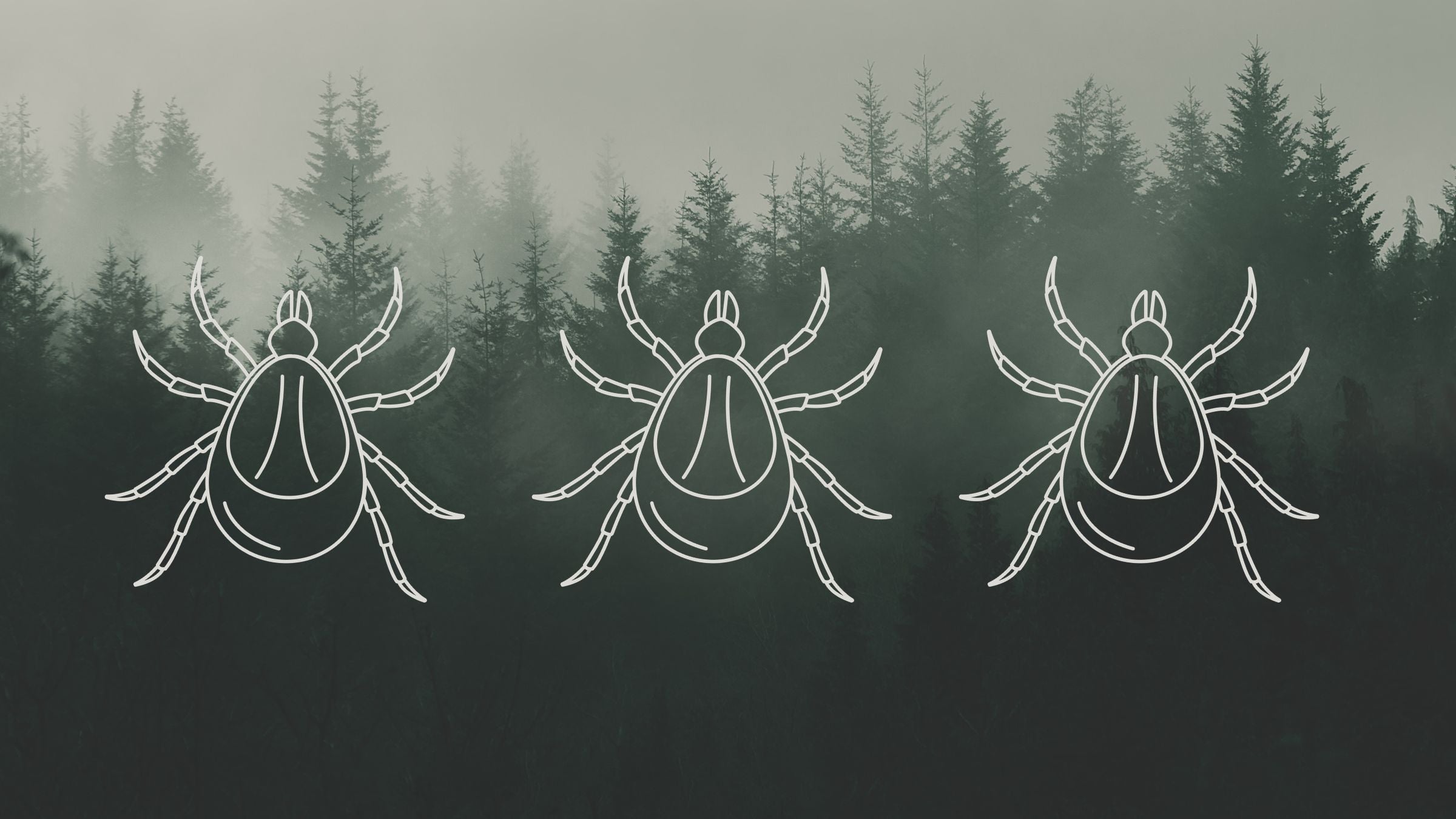
The blacklegged tick, or deer tick, is a vector for a handful of diseases, including Lyme. (Photo: Ayana Underwood/Canva)
Key takeaway: New data from the Centers for Disease Control and Prevention (CDC) shows that hospital visits related to tick bites are on the rise: out of every 100,000 emergency room (ER) visits in the United States, 85 involve tick bite treatment, a whopping 77 percent increase in tick-related ER visits since 2017. Northeastern states are seeing the most hospital visits, followed by the Midwest, Southeast, West, and South Central U.S. You can view the CDC’s tick bite tracker here for a state-by-state view. Because ticks may carry Lyme disease (not all of them do), it’s crucial to protect yourself while enjoying the outdoors.
At home in Brooklyn, New York, my wife and I have discovered ticks on our dog, a pit-boxer mix who lacks the wherewithal to notify us of such an intruder. A few weeks ago, I found a tick—luckily, before it bit—on my arm while visiting Oakland, California. Outside editors have been coming across the disgusting creatures in northern New Mexico (South Central), northern Virginia (Northeast), and coastal Massachusetts (also Northeast).
A decade ago, my little sister contracted Lyme disease in high school, so I have always been paranoid about tick bites. And with growing tick populations, ever more tick-related diseases such as Lyme disease, and a flurry of headlines about both, I’m sure I’m not alone.
ADVERTISEMENT
But if we stay inside, the bugs win. So we spoke to some experts to learn why ticks are thriving, what we can do about it, and how to continue exercising outside safely. The good news? You can take precautions no matter your outdoor sport of choice, and finding a tick doesn’t have to be a five-alarm emergency.
How Many People in the United States Get Lyme Disease Each Year?
Ticks are experiencing a largely unwanted glow-up in our current times. The largest vector-borne disease today is still Lyme, Alison Hinckley, epidemiologist with the CDC’s Division of Vector-Borne Diseases in Fort Collins, Colorado, told Outside. She cites a 2021 estimate based on insurance records that shows 476,000 Americans are diagnosed and treated for Lyme disease each year. The majority of tick-borne illnesses in the United States are Lyme disease.
As a point of comparison, only about 2,000 cases of Rocky Mountain Spotted Fever, another tick-borne disease, are reported, each year in the United States.
What Type of Tick Causes the Most Health Issues?
There are hundreds of tick species, but the one most concerning in the United States is Ixodes scapularis. The hard-bodied tick, also known as the black-legged tick or deer tick, is a vector for several diseases, including Lyme disease. “It causes far and away the most trouble in terms of health,” says Dr. Peter Krause, senior research scientist at Yale School of Public Health and Yale School of Medicine.
ADVERTISEMENT
How Does a Person Get Infected with Lyme Disease?
Ticks have a three-stage life cycle, Krause explains. As larvae, ticks feed on small mammals like mice. If these mammals are carrying Lyme-causing Borrelia bacteria, the tick is now infected and can transmit the disease. The “bloodmeal” (yum!) allows the larvae to molt into their next stage, when they are known as nymphs. At this point, if a nymph feeds on a human, the human will become infected.
What Are the Symptoms of Lyme Disease?
Typical symptoms of Lyme disease include:
- A rash (some may be in the shape of a bullseye target)
- Fever
- Headaches
- Muscle aches
- Joint stiffness
- Severe fatigue
- Neurological symptoms
What Are the Different Types of Ticks and Where Are They Located?
According to the CDC, there are ticks in every state, though different species (carrying different diseases) proliferate in different environments.
ADVERTISEMENT
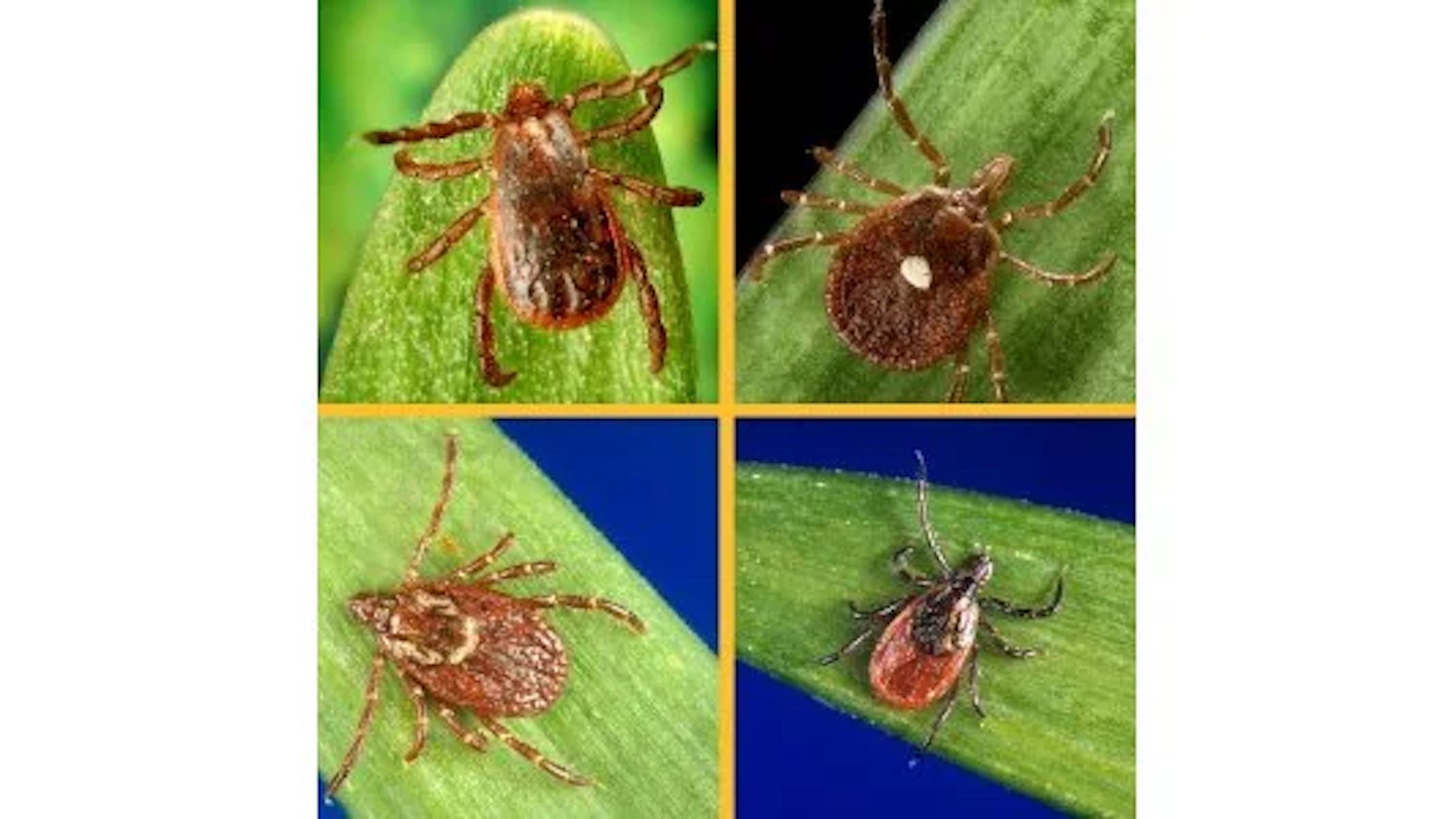
For instance, the lone star tick, named for a white spot on its back, is often found in Texas, and the brown dog tick thrives in Arizona. Lyme hails from Krause’s home state of Connecticut—it was named for the town of Old Lyme in the state—but he might also encounter wood ticks and brown dog ticks, both of which can transmit Rocky Mountain Spotted Fever. It’s not very common, he says, but the disease can cause fever, nausea, muscle pain, and a host of other scary symptoms.
Despite its name, the lone star tick can also be found in Connecticut (it’s prevalent elsewhere on the East Coast and in the southeastern and south-central United States), and it can transmit an infection that causes Alpha-gal Syndrome, which sometimes causes a permanent allergy to red meat.
Another tick-borne disease, Babesiosis, used to be called “Nantucket fever,” because one of the first cases in America was found on the nearby Massachusetts island in 1969. The Gulf Coast, American dog, and winter ticks transmit different pathogens around the country. You can see what ticks live in your state on the CDC website.
Why Are Tick Bites on the Rise?
Here’s why ticks are going viral, according to experts.
ADVERTISEMENT
Climate Change
Climate change is a major factor in the rise in tick-borne diseases. Ticks need temperate, moist climates—they’ll die if it’s too hot, cold, or dry. Global warming, Krause says, is increasing tick habitat, with more areas becoming warm and humid. Given the southern states are experiencing hot, dry weather, they might have a temporary decrease in tick populations, but that hasn’t yet been shown, he says.
As evidence, Krause cites our northern neighbor. Canada was not historically home to Lyme-carrying tick populations, but now sees many cases of Lyme each year, due to both climate change and tick migration.
More Deer Means More Ticks
The second factor that might be fueling today’s tickflation is deer distribution. Deer ticks, predictably, travel on the backs of deer and other furry creatures, but they can also attach to birds, Krause says, allowing them to establish a new colony hundreds of miles away. Adult ticks use deer as all-you-can-eat mating hotels, and a single deer can host hundreds of ticks, Krause explains. “Wherever deer are, there are a lot more ticks than there would be without deer,” he says.
There is some agreement from across the pond. Dr. Lucy Gilbert is a Senior Research Fellow at the University of Glasgow with a focus on ecology, environmental change, and infectious disease ecology, along with evolution and diversity. Her research strongly suggests that the boom in deer distribution and abundance is a greater factor in the proliferation of ticks (though not necessarily Lyme disease) than climate change.
ADVERTISEMENT
How Can You Avoid Tick Bites When Going Outside?
The simple answer is that activities that put you in tick habitat—long grass or forests with dense shrubs—will be higher risk than sports that don’t. Hiking and running in the woods increase the likelihood that you’ll encounter a tick. Even short grass, as you’d find on a baseball field or soccer pitch, can carry ticks, Krause says. Something on a hard court, like basketball, would be very low-risk.
The CDC recommends staying away from thick vegetation, high grass, and leaf litter, and to “walk in the center of trails when hiking,” to avoid brushing up against grass or other plants where ticks might be hanging out.
ADVERTISEMENT
Riding a bike on a trail might be lower-risk than running it, says Krause, because ticks will have greater difficulty reaching you from the grass, and cyclists are more likely to stay in the center of the trail. Walking may also be safer than trail running, as you’re more likely to avoid brushing any grasses in places with sharp turns, Krause says.
Dr. Kevin DuPrey, a sports medicine specialist, wrote a 2015 article about Lyme disease in athletes for Current Sports Medicine Reports, and he also has firsthand experience. When running cross-country at the University of Delaware, Duprey contracted Lyme disease. Before he was diagnosed and treated, he’d experienced mid-race fatigue to the point of wanting to lie down and nap during the middle of a competition.
Today, as a precaution, DuPrey tries to avoid overgrown trails, especially from mid-May through August, when the transmission rate is highest for Lyme and other tick-borne diseases. He’ll check himself for ticks after running, or even mid-run if he’s in an overgrown area.
Which Bug Sprays and Clothing Choices Repel Ticks?
DuPrey recommends bug spray with DEET to repel ticks, but also offers a clothing tip: light-colored threads can make it easier to spot ticks on your body.
ADVERTISEMENT
The CDC also recommends using EPA-registered insect repellents (like OFF! Active Insect Repellent I), wearing loose-fitting clothing, and treating your gear with permethrin, an insecticide that should not be applied directly to your skin. Other effective repellents include picaridin, IR3535, oil of lemon eucalyptus, para-menthane-diol, or 2-undecanone.
“In general, DEET, if used as prescribed, is safe,” Krause says. You wouldn’t want to apply it to a small child if they’re going to lick their skin, he says, but considers it safe overall when used as directed. If ingested, it can cause serious side effects, including seizures, according to the National Pesticide Information Center. But aside from a chance of skin irritation, it’s safe to apply topically. Permethrin is only suitable for application to gear and clothing, says Krause.
How Can You Check Your Body for Ticks?
When you head back inside, Hinckley recommends you check your clothing and gear for ticks. Then, using a mirror, check your entire body, particularly under your arms, in and around your ears, inside your belly button, the backs of your knees, your hair, between your legs, and around your waist. Then, take a shower as soon as possible.
ADVERTISEMENT
Hinckley also encourages good tick hygiene for pets. Preventative products like topicals, chews, and collars can help, and she advises manual pet-downs for ticks after time outside. This isn’t just for your pet’s sake—ticks can take a pitstop on your four-legged roommate before making their way to you.
It’s understandable that you might freak out if you find a tick, especially if it’s attached. But if you find it early—within 36 to 48 hours—DuPrey says, the chance of Lyme disease transmission is actually very low.
If you’re uncertain how long it’s been since you were bitten, he advises seeking professional medical advice, especially if you were bitten during the summer months, find a circular rash, or experience flu-like symptoms. If caught early, both Krause and Duprey say, Lyme and other tick-borne diseases can be treated with antibiotics.
ADVERTISEMENT
As an expert who’s closely studied ticks and tick-borne diseases, Gilbert praises the media’s coverage in highlighting tick awareness and Lyme disease. But she says there is sometimes “too much scare-mongering and exaggerating the outcomes of Lyme disease.” While noting that some people progress to chronic Lyme disease, which can be debilitating, the vast majority of people who contract Lyme do not develop a long-term illness.
What Is the Easiest Way to Remove a Tick?
Gilbert has heard about certain tick-removal techniques, such as applying Vaseline or olive oil, or burning them off your skin, but her advice is simple: “This is not a good idea!” Instead, she recommends gently plucking the tick off your skin by its mouth, using fine tweezers or tick tools (available at veterinary clinics, pharmacies, and online), which won’t squash the tick. If you do find a tick, take a picture of it before you dispose of it, so you can show it to a doctor if you need to visit one.
For disposal, the CDC recommends putting the bug in alcohol, a sealed bag, tape, or a soon-to-be-flushed toilet. The CDC also has resources that can help you decide what to do after a tick bite.
People with immunocompromising conditions are at greater risk for tick-borne infection, Krause says, and should exercise additional caution. As a historical example, he notes that when Babesia (the parasite that causes Babesiosis) took over Nantucket, an editorial in the New England Journal of Medicine advised people without a spleen to avoid buying land there. (The spleen, which helps fight infection, is crucial in warding off Babesiosis.)
The best path forward might be to channel an anti-Robert Frost mentality. If you’re going to choose a path to hike, run, or bike, choose a well-worn one, and stay in the center of it. And I’m not sure if Frost wrote a poem about this, but check your body, take a shower, and throw all your clothes in the dryer when you get back inside.
ADVERTISEMENT
Want more Outside health stories? Sign up for the Bodywork newsletter. And to listen to the audio version, say while on your next hike or bike ride, sign up for an Outside+ subscription here.
