

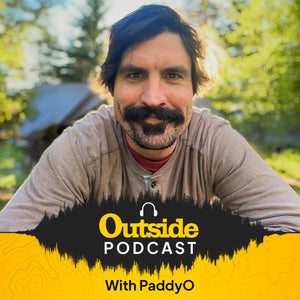
Hot Take: We should camp for camping’s sake! If you’re anything like me, your camping is often (always?) in service of some greater objective, whether it’s a backpacking trip or mountain you’re climbing or a weekend of mountain biking. But are those objectives actually greater than simply hanging out under the clouds and stars for a few days? Campthropologist’s Rolland Tizuela doesn’t think so. The San Diego-based creator focuses on making camping accessible and approachable for beginners, inspired in part by research he conducted on the culture of hiking and camping while getting a degree in sociocultural anthropology. In Rolland’s view, everything we do at camp—from cooking to tent siting to going to the bathroom—is a fascinating form of community building. It’s a conversation that has me excited to bring little more than a tent and a mellow attitude to my next overnight outdoors.
Podcast Transcript
Editor’s Note: Transcriptions of episodes of the Outside Podcast are created with a mix of speech recognition software and human transcribers, and may contain some grammatical errors or slight deviations from the audio.
Rolland Tizuela Ep Draft
[00:00:00]
Paddy: Your outdoor time and your social media content seems pretty focused on the act of spending time outdoors rather than solely focusing on an outdoor sport. So how much of your time is spent getting after something specific, like hiking a peak versus pulling up a chair at a campfire and shooting the breeze with the pals?
Rolland: Dude, we are basically strictly shooting the breeze with the pals, to be honest. You know, a lot
of times we will, people will break off. But like we're base camp, you know,
the majority we're base camp. Um, and I think too, like coming from like a backpacking background, um, sometimes I will do, it really depends on who, but like for the most part, like, I like especially because like having a group that's diverse, like some people do like to go, some people don't.
I like to stay with the people that don't, just to make sure that they're good and they have a good experience, you
Paddy: yeah. Yeah.
Rolland: if you're going on a hike, you're probably pretty comfortable being.
Out in nature and stuff. But, but short answer, we're straight chilling, man.
We're
Paddy: I like it.
Rolland: We're a base camp.
We keep the, the hot dogs warm and the beers cold for whoever wants to [00:01:00] hike.
Um, yeah, The campsite is the destination right
Paddy: MUSIC
PADDYO VO:
Camping is one of my very favorite things to do, but the truth is that I rarely go camping just to sit around with my friends outdoors. It’s almost always in service of some outdoor objective—a trail we’re going to run or some peak we’re going to climb or some river we’re going to float. Which is weird because, invariably, some of my favorite moments on these trips are the ones spent around a campfire, sharing meals, telling stories, busting chops, and taking in vast night skies.
I love these moments so much that, even before it’s time to break camp and get on to whatever it is we’re technically out there to do, I get … well, sad.
Psychologists have a term for this. It’s called anticipatory grief and nostalgia, and it’s the bittersweet emotion of missing a present [00:02:00] moment before the moment’s actually passed. Now, it would be reasonable to ask, “Why not just go camping just to camp, Paddy?” You might even point out that my anticipatory grief and nostalgia for camping might be cured by just … you know … camping more.
And one guy who would totally agree with you on this is Rolland Tizuela.
PAUSE PAUSE
Rolland is a San Diego-based outdoor advocate focused on making camping more approachable for beginners, and his favorite thing to do outside is simply BE outside. You may have come across him on Instagram under the handle Campthropology, where he posts funny and informative videos on camping gear and techniques, as well as insightful observations on how people interact with the outdoors. Think “check out my cute AF campsite” tours, car rigging how to’s on his lifted and kitted out Subaru, and many—like, a lot— gut-busting, hilarious explanations of how [00:03:00] to go to the bathroom outside. Rolland’s favorite piece of gear may be his gold poop bucket.
But Campthropology isn’t just a clever port-man-tow --portmanteau. Rolland has a degree in sociocultural anthropology from UC San Diego, where he conducted research on the transformative impacts of long distance hiking and outdoor experiences. A lot of this work was done on the Pacific Crest Trail, which is where he developed his theories of camping as culture and how everything from what we use to what we do outdoors are really just rituals in service of community building.
It’s pretty high minded stuff, but Rolland is no egghead and he’s no couch potato, either. He’s an avid hiker and overlander who appreciates peak bagging as much as the next puffy-wearing trailhead aficionado. But the thing he’s devoted his life to is making sure as many people as possible know what it’s like to [00:04:00] sit comfortably around a campfire and sleep confidently in the great outdoors. When it comes to camping, Rolland doesn’t get anticipatory grief and nostalgia because he’s too busy showing people the Milky Way or feeding them an excellent camping meal for the first time.
Living in the present isn’t just a dying art, it’s a human imperative, and campsites are the ultimate filter for our endless distractions. After talking to Rolland, I’m committed to getting out to one a lot more often—hell, I might not even bring trail runners next time.
MUSIC
First things first, burnt toast. What is your last humbling and or hilarious moment outside?
Rolland: man. I think both humbling and hilarious. I'm always super humbled by I've really learned in the past year especially, it's about community out there. It's about the homies that you're with out there.
And the last trip, we went to Overland Expos, like a group of like 16 of us camping and one of the homies made overnight [00:05:00] pozole.
Right.
And everybody camps and like, we have group meals and it's, I
usually like hot dogs and like chili something super
Paddy: Yeah,
Rolland: You know, . I was watching Molly tend this overnight pozole
like a dad to a child
Paddy: Uhhuh.
Rolland: since six o'clock. The night before doing the coals, she brought a huge cast iron and just like slow cooked this pozole
And like we had two campfires. So there was like the group was hanging out at one po And I'd like wander over and I'd be like, what are you doing over here? She's just like in the dark, you know, just like with a beer, like I'm just tending the pozole. And I was like, I honestly felt like so loved, bro.
I was like, oh my God. I was almost like brought to, I was super humbling. I'm like, dude,
this person, Molly really cares about this group and it was the best. And the reason why it was hilarious too is because, so in the morning everybody, you know, everybody's, you know, having beverages all night and everybody wakes up in the morning and
Paddy: Yeah, yeah,
Rolland: this was pozole like, she just opens the pot and it just whiffs out and it can just smell it and the whole campsite Everybody's like, oh, of course we've been waiting for this all night. But [00:06:00] like everybody comes over and like with like a paper plate. And I was like, get that paper plate outta here. This Molly's overnight pozole. I busted out my titanium bowl and I'm like,
this can only be a vessel for this pozole.
Paddy: a goblet.
Rolland: Yeah, exactly.
Everybody never.
Paddy: your last humbling experience outside is your pal just flexing their chef-ery, their outdoorsy
Rolland: was like, it, this is the, the amount of time that this took for this Paoli was, I'm like, this will never be topped. I was like, I'm done. Yeah,
Paddy: Also, I know that you're an overland guy. Like isn't overland just car camping with a fancy name?
Rolland: dude. Exactly, man. Like
Paddy: Take that. You overland bros.
Rolland: yeah, it just, you're just car camping without a table. Great. Anybody can throw a table in
their car, you know? You know.
Paddy: and a shovel zip tied to the side of your rig.
Rolland: Yeah.
yeah, yeah. yeah.
Yeah. People take it too seriously.
Paddy: All right, let's get into it.
PAUSE PAUSE PAUSE PAUSE
Before we really get into anything, we gotta talk about something because never, ever, ever, ever, ever, ever, ever, ever [00:07:00] in my life have I come across a person who is as in love with outdoor deucing as you are. You have so many videos exclaiming your love for the poo with a view.
There are instructional videos. There's one where you are slow dancing. To Always Be My Baby by Mariah Carey with your poo bucket. You and your wife announced your pregnancy by using a tiny poo bucket. Roland, explain this
Rolland: Okay.
Paddy: very awkward love affair.
Rolland: Definitely, definitely. Um, I'm kind of known as the guy that poops in a bucket on in nature. Um, I was at Overland
Expo and I had this thing at one guy walked by and whispered to me to get my attention. That's the guy that poops in a gold bucket. I also spray painted it gold. Um, yeah. When I realized that one of the big barriers to entry for new campers, especially people that wanted to experience disperse, camping and overlanding, was how do I take a deuce [00:08:00] outside because
Paddy: Yeah, sure. For sure, for sure.
Rolland: a lot of people, you know, the hiking community is really used to, you know, digging the, the hole six inches, you know, 70 paces
squatting.
Paddy: Yeah. Oh yeah. The
Rolland: we really weren't into that, especially car campers.
Um, so, and I was like, wow, people and people started being like, oh, like, kind of like embarrassed to ask.
So I saw this like stigma, this barrier entry. So I was like, you know what? I'm gonna make this like fun. This is the question I'm getting the most, I'm gonna make it approachable,
fun as sanitary as you can be out
there. So I was like, dude, let's gonna start the epic poo view. So I used to do this pop-up tent, like it's like a little, you know, porta-potty tent that you'd go in for
privacy , and then I have the kind of the two bags system. One's like a compostable bag and then you change the bag. I have these little eco flows that you put in there so it doesn't smell, it absorbs
Paddy: Oh yeah, those things are great.
Rolland: Yeah.
some people say you sawdust cat litter,
but just absorbs the liquid. 'cause a lot of times when you're overlanding you want to pack that out.
You definitely don't wanna leave that out there. Um,
'cause there are No, trash cans out there as well. So it's like a whole process to, you [00:09:00] know, go to the bathroom out there.
And so I started doing just like, this is my, this is my poop bucket, loadout, you know,
Paddy: yeah, yeah,
Rolland: the epic poo view. And then I started kind of ditching the little tent.
one of my, literally one of my favorite things to do is like, just at night, if you're there and you're around the campfire and, you know, nature calls, you gotta deuce it up out there. I'll just tell, tell the homies, I'm like, I'm gonna, I'll be back. I take my bucket, you know, a, a
away, so that, I like to be able to kind of, this is weird.
I like to be able to kind of hear the homies in the background, but like, not so they're super close. And then you just drop trow under a brilliant
night sky and you're just like, we're not meant to deuce in four walls, man.
Paddy: yeah,
Rolland: once you experience the
epic pooh view,
Paddy: Yes. Yeah. Facts. Facts. So you're just out here dropping trout to drop the stigma to just poo for the people
Rolland: Poof, poof. For the people, my friend. I love that. Yeah. Yes, yes.
Paddy: I love it. Oh my God, I love this. This is so great.
[00:10:00] PAUSE PAUSE PAUSE PAUSE
Not always, but a lot of the passions that we have in adulthood can be traced back to moments, from our childhood. And I know that you grew up camping only a few times a year, but do you think that there's a time camping when you were just, wee Rolland that you thought, dang man, like I love it out here.
I love camping. Do you have a memory like that?
Rolland: For sure. Yeah. . We used to go camping in San Felipe, my family down in
Mexico, and I just remember one time we were sitting on the beach and we're camping. And one of my tios just comes out and he has, I guess said, this is where it's like, not kosher. He has fireworks, so you don't take fireworks camping. Right. He just has fireworks
Paddy: Dude, this great
Rolland: you know, he's been, he's been drinking beverages all day and
we're all sitting there with a bunch of kids and he's, we see him get down his knees and he kinda sticks this thing on the ground and then like he lights it and we're like, oh, it's gonna be great. Not realizing he lit it against the wind. So all these firework go and then they come right back at us. And like, as a kid, I was, [00:11:00] I was, I thought it was so cool. I was
like, I didn't know if he did it on purpose, but like, that was like the kind of family camping experience and like, right then I realized I was like. Which is kind of the wrong thing. I was like, you can do anything outside. You know, you shouldn't do that
outside. But I just
Paddy: mean, I mean, you can do anything, but you probably shouldn't do everything.
Rolland: exactly. Yeah, totally. Exactly. But I just remember being like, wow, this is just like a cool space to like, you know, in my mind, like do stuff like that and just like be outside.
And that was a whole trip We went to San a few times, but that's always the memory camping. That really sticks out to me.
Paddy: I, I mean, it sounds like kind of what you're describing is, is like A sense of freedom, I mean, you know, maybe lighting M eighties into the wind is not a great idea, you know, sending bottle rockets at your nephews, maybe not a great idea, but, do you think that really what it boils down to is like, oh, I'm out here and really like, I, this is adventurous.
This is not your day-to-day stuff. This is different and unique.
Rolland: Yeah, yeah, for sure. I would say, for me, the experiential is not adventurous, but almost like experimental.
Paddy: Oh,
Rolland: like you can go out [00:12:00] there and
feel different ways, kind of without the constraints. 'cause a lot of times, like psychologically, I know you just had a, a podcast kind of on the psychological, when you go out there, you're, the roles that you play in your daily life are kind of lifted,
especially if you don't have service.
You know, so you physically don't have people texting your phone,
but also like, you're kind of like bare out there. It's real, like primal.
So it's like, well, how do I feel in like my most bare naked emotions? You know? And you can
experiment with that of like, alright, what kind of like a, like what am I made of?
But also a reminder of like this, this how like humans started before we were pooping in four walls. You know, like to bring it back. We, it was very, it feels like very natural. So like experimenting with how that feels, you know? And like the uncertainty. And like a lot of times for new campers, it's like, you don't know how your meal's gonna go tonight?
Is your
Paddy: yeah, yeah.
Rolland: What's the weather gonna be like? Is the sunset gonna be cool? Is it gonna be cold? All these different things go through your head and you're like, all right, let's just experiment. You know, let's go with the flow and see how it kind of pans
out, you know?
PAUSE PAUSE PAUSE PAUSE
Paddy: [00:13:00] When you're at the University of California, San Diego, you studied sociocultural anthropology and you conducted research on the transformative impacts of long distance hiking and outdoor experiences.
So for this research, you spent a ton of time on the Pacific Crest Trail, and there is a very storied and very, very celebrated PCT community. When you were first exposed to that community, what stood out about the PCT hiking family?
Rolland: So I did the first a hundred miles, so that's kind of like the, the not, I would not even the beginning, like the, I think they say like, you know, the Sierras is when it really starts
feeling like you're part of the community.
But I thought, I thought and I saw 'cause doing the first a hundred miles and meeting people and kind of trail angeling along the way
is everybody was on an equal playing field.
You know, it's literally like what you brought out there on your back. So, and I think this sets the stage for later in the hike as you go further, the camaraderie that's built and [00:14:00] solidified in like the little kind of pod families that people had. But everybody was kind of a new slate. Everybody had a blank canvas in front of them. That's where the experimental part comes in. Everybody is experiencing the same thing and experimenting with how they, how they conduct themselves, how they feel, how far they're gonna go out there in the same way. And that's what initially I thought was really cool. We were all out there like, what did you pack?
That's when you start going with gear, like what are your, um, what's your luxury item? So we're all on the same trail. The sale trail treats
everybody the same. It's the same trail, but everybody brings different approaches
Paddy: what do you mean by even playing field? , Are you saying that because you're just carrying like all of your belongings on your back for however long you're doing the PCT that the, what? The socioeconomic cultural systems of day-to-day life in America don't apply
Rolland: ultimately to be able to hike the PCT is a complete privilege in
itself. It costs a lot of money. It costs a lot of time. Yeah. I, I would love, I would love to, you know, hike the whole PCT [00:15:00] and a lot of people would, but you gotta take, you know, four to six months off. So in that sense, it is definitely not accessible to everybody for a
lot of diff even like, socioeconomic reasons. but when I say that the trail treats everybody the same is equal, it's meaning that everybody's gonna hike the same trail.
Like it's not gonna be a higher incline for some people than it is the other
Paddy: Okay. I see what you're saying.
Rolland: The trail is the same for everybody
I think too, my thoughts initially went to, people started thinking in like, time increments that were smaller. And so I guess you can also say that it, you become more like mindful in a way,
is that your perception of time is like in the moment you're just trying to get to, you're get the
next step, get around the next bend, especially like when your, body's hurting and you're tired, you're just focusing on this moment. And I don't know in our regular lives how often people take the time to just focus on this exact moment
and what's gonna happen, this next foot footstep around the next bend, down the next mountain.
The trail kind of demands your attention ,
Paddy: for the research [00:16:00] that you were doing while you were in college, were you interviewing folks on the trail
Rolland: Yeah, so anthropology, one of the methodologies of research is like participant observation. So initially just did, did the trail, like
the a hundred miles right there.
And then what I did was basically something called trail angeling. And I trail angel when people were starting the PCT.
So there was like people on the trail. So I drove out to basically one of these big trail junctions and I set up some chairs, you know, I had some hot dogs, snacks, sodas, couple, you know, beers and
just basically just had gave hikers a place to just resupplied them for the
day. You know, I was like, take whatever you want. But I was like, Hey, while you're sitting here, do you mind if I ask you some questions?. But I
also kind of like zigzagged
on like day hikes and just like walked, you know, a few miles and then walked a few miles back. And as I saw people, I just started kind of asking 'em questions, interviewing 'em, and taking some, you know, data points I was really interested in.
Like what kind of like trash they had. Not knowing the big leave, no trace thing at the kind of time of like
the whole thing. Um, 'cause in anthropology a lot of times, like what trash you [00:17:00] have tells you a lot about. Civilizations.
So I was like, huh, I wonder if I can like fix that to the trail at some point, you know?
And then that's when I learned that some guy was basically doing the whole thing on um, cliff bars and I was like, wow, that's, that was all his trash, you know? Um,
but yeah, so that's how I, I think he was trying, I don't know if he ended up, I dunno if he ended up doing it. I was like, that doesn't, that sounds uh, rough
for a lot of
Paddy: really rough for a lot of reasons. Yeah. So then when you, came to the conclusion that there is a transformative impact to someone's life when they do the PCT, what exactly is the shift in them that you observed?
Rolland: First, I always just like to say a lot of people would start the trail to take six months outta your life and do something. People were already in transitional aspects of their life. Like a lot of people were like newly retired.
A lot of people from overseas, like newly graduated, you know, a lot of people lost someone.
So they're doing the hike in the name of someone.
So. I was asking 'em stuff when they were like a week or two off trail. But then, Then I kind of like extrapolated how I thought people would change after that.
But initially people definitely saw that they started [00:18:00] feeling their place in nature differently and then their place in the city differently.
So
meaning a lot of times people, one of the biggest things that I saw was people initially when they first went on the trail, especially if you don't have a lot of experience backpacking. You feel scared the first couple
nights, you know, like, you're like, wow, I'm freaking out here. Like
there's, who knows where the next person is.
And then I started to see kind of, even by mile like two, 300 people started to feel like safer, like more comforted by being outside. Like nature was now protecting them.
And then people started to feel like when they would go resupply, they'd feel, I wouldn't say necessarily say scared, but like the anxiety was up being around people and like going into ask any hiker that when their f their first hitch, they're like, dude, this car's moving so fast.
You know, like, and then get, and then getting into town
and then like seeing people and money and just like the bells and whistle like be
of the grocery
Paddy: sensory overload or is there something more emotional or psychological actually happening?
Rolland: Think it's both. Because I think also when you come back into town, especially if you start, if your, you know, [00:19:00] your phone starts text messaging you like,
even if it's people that you love that are checking on you, you kind of. Reattach in a way.
And you start to kind of think about the person that you are at home, you know? Even when I was doing the trail, like sometimes some of my friends, like the homies would text me like, how you doing bro? And I was like, I don't know, like are you asking me from
like the person you knew having beers at, you know, the bar the other day or like the dude that's out here hiking the trail.
'cause it's two
different answers, you know? you're just like in a completely different state of mind and a completely different flow state.
Paddy: So how did studying anthropology in this way influence the way that you look at outdoor culture, outdoor adventure?
Rolland: What I realized is well before a lot of my camping community I met online via TikTok and Instagram. so, but before that I was solo soloing all the time. Like every weekend I was out soloing or just me, it was just me and the wife at the time. And so when I bought my Subaru Outback, I, you know, when you're doing your build, you're like, okay, do I need like traction boards?
You know, do I need, what do I need to be out there if something happens and I need to be self-reliant on [00:20:00] myself and my vehicle to get out.
I've always been like an everyday carry person,
but what really solidified that in my normal life was. Normal life being non, being not camping
was really seeing that being prepared allows you, or having a plan a little bit allows you to be spontaneous.
And I know that seems like conflicting things, so if I'm solo out there, if I'm on a, if I'm on a day ride and I see a trail and I don't have my shovel, my traction boards, my recovery gear, I'm
probably gonna be like, I'm not gonna chance, I'm not gonna chance that trail 'cause I,
Paddy: Yeah, I'm not going down that thing 'cause I don't know what's around the bend and I don't know if what I have in the rig is gonna get me out of any type of, you know, poo hitting the fan type of situation.
Rolland: exactly. Yeah. So.
But when I do have it, it's kinda opposite. You're like, oh, I got all, I got all my stuff with me. You know, it might be false confidence, but you're like, I think I can, you know, get out if I, if I get into something sticky and not
too bad, but like I have stuff to alleviate some of those, uh, pressures if I go out there.
And then that really started getting me thinking like that's how like emotions work with [00:21:00] us. You know, like you have these tools that we learn
and that everybody's trying to grow, that we keep, you know, in our roof box, which is our head.
So that when we experience hardships in life, we're like. Oh, I have these tools, but also if you're nervous about going a situation, I dunno, like for example, like public speaking,
if you have your tools in here, then you're more likely to be like, okay, I can probably do this. You know, and being kind of self-reliant with camping and hiking. That's how it's really transitioned into my everyday life. Even like, like I said, whether it's practical stuff like, oh, I always carry a flashlight and a knife and hand sanitizer. Or if it's like, all right, well, you know, I'm have this presentation or like something that happens at work. I was like, all right, well, I kinda like, what do I have in my little toolkit? I was like, okay, I got this, this, this. I'm feeling good. Then I, even if I'm not completely confident that it'll go smoothly, I have the tools to get out of or alleviate the sticky situation in
Paddy: So the lesson was bring all the cool stuff so you can do all the cool stuff.
Rolland: That's great. That's a, that's a tagline. That's a, that's, that's, are you in market? It's a marketing thing [00:22:00] right there. Bring all the cool stuff so you can
do all the cool
Paddy: I do have a little bit of mouth athleticism myself, sir.
Rolland: There you go. Yeah.
PAUSE PAUSE PAUSE PAUSE
Paddy: just a moment ago, You alluded to this, this idea of, hikers or just people in general out in the wilderness move from fear to feeling protected by nature over time. Have you experienced that shift personally?
Rolland: I definitely have.
the First time I went solo desert camping, I don't know, I can camp in, in forest and feel fine for some
reason, but when I.
went to the desert, I just felt so exposed, solo, dispersed, camping.
It, it shook me. I was like, and I started to go like, why am, why am I feeling. Like this, you know, what about the
desert? So I kind of broke down in my own head like, what, what are the things that I'm experiencing that's making me feel uneasy? Kind of spooked out, kind of creeped out.
And I remember, weirdly, it was dispersed camping, but I had cell service in that little pocket.
So I was calling my friends that night, which is what I usually never do, but I was,
Paddy: Hey guys, what are you? What are
Rolland: Exactly. Whatcha guys doing? right now? I'm just, uh, you know, [00:23:00] and I was just so spooked out.
And then,
Paddy: where were you and when was this?
Rolland: this was an Anza Borrego, state park down, uh, San Diego. And it was, it was right when I first got the Outback.
So it must have been end of summer 2020.
Paddy: Okay, so paint the picture for us. What's the terrain look like? Describe the sky. Tell me about the, the weather. Set the scene for us so that we can understand how it was spooky
Rolland: and also too, so my car was bare this site, so I didn't have any of my
like recovery gear built. So going back to the, yeah, I didn't have my cool stuff,
but I was trying to do cool stuff, you know, I didn't have my cool things, but I was trying
to do cool stuff. And then this one happens when, you know, I had your cool things.
Um, I was in this place called, uh, Blair Valley. and I rolled up in like, at like 12. So sun was out. I was like, this is
great out here. There's nobody out here. That's how I like it.
Um, I saw like a couple camps on the way in. I was looking for a spot and I came upon this like big, like. Boulder, like a giant rock it looked like someone had a campfire there before and it was already cleared and flat. And I was like, cool, this is great.
I'm
gonna hang out [00:24:00] here. Yeah.
I was like, uh, had my awning. That's the one thing I did have. So I sat there, put my awning out, you know, set up my, I just had my little backpacker tent at the time
and then I was having a great time, you know, I was sipping some beers. sunset and desert was just like, you know, that purplish
pink sky? It was one of those.
Paddy: Oh yeah. The kaleidoscope sunset,
Rolland: Oh
Paddy: what? Yeah.
Rolland: I was just grooving. I started a
little fire, you know,
And I was like, this is great. And the sunset was amazing. And as the, when the sun went down past the mountain, so it's not dark.
'cause the mountain's pretty high.
So I can't see it anymore, but it's still light. So we still have some daylight left. And the temperatures dropped, you know, almost immediately. So I'm started to
Paddy: yeah, yeah, yeah,
Rolland: alright, now that, that, you know, fun, warm sunset this day's done. Like what am I, uh, what's going, what what Now, you know, this is
was my first time solo camping in the desert.
This is how I knew I was
nervous. I started tidying up my camp like, as if, like, I, if I had to leave real quick, I could
just throw stuff in, in, in bail. And I have photos of
that campsite and I literally just have my tent [00:25:00] out and like a table in a cup,
you know, usually, like, I'm a, I'm a gear person, so I, I have
gear. It's not disorganized, but I like to
have my gear everywhere, you know? So that's, I realized, like, and I started seeing those behaviors in me that I don't usually have when I'm like camping in the forest or like, you
know, the mountains. And so I was like, alright, well something's, something's definitely up. But when I started to feel comfortable in the desert is I made a conscious effort to go back to that exact spot and
in that area and
Paddy: in the same moment that you felt like protected
Rolland: no, no, no.
I, I, I,
drove outta there a little faster than I drove in. Like,
I just,
Paddy: well, did you go to bed? Did you
Rolland: Oh, I didn't, I, I went to bed. Did I sleep? I don't know. Because all, yeah, because
Paddy: Yeah, I took a series of really crappy naps
Rolland: No, yeah, that's exactly, yeah. Yeah, yeah, yeah.
PAUSE PAUSE PAUSE PAUSE
Rolland: Something that really kind of weirded me out was you're at high noon and you're in the, in a valley, everything kind of looks flat, meaning it looks like you can't see the contour of mountains
so as the sun started going down,
the shadows started [00:26:00] like creeping towards your campsite, you know? So you kind of saw, yeah, you kind of saw your campsite swallowed, swallowed
Paddy: my God,
Rolland: almost, you know.
And then also on the other mountains you can start to see how some mountains, I was like, oh, that mountain actually kind of comes out is not that far away because now that I can see the shadows, like things just became more like. 3D. So it's almost had this feel feeling of like in something like encroaching energy on
Paddy: Oh, okay.
Rolland: That kind of weirded me out a little bit at the beginning, you know?
But now the next time, so yeah, familiarity thing, I was expecting that. And so I kind of turned into like, let me pay attention to how this is happening now. So I kind of made it like, all right, so I know this is gonna happen. Cool. Let me see. And it wasn't the second time even, or the third time, it was probably like the fourth or fifth time when I started to
feel like, okay, now I can like relax.
Paddy: Do you think that it, that's like a forever switch, or is it something that happens like every time you go outside
Rolland: I think that's a forever in your rooftop box,
Paddy: In your
Rolland: your noggin, in your toolkit
now. So if I were to experience, uh, like, I [00:27:00] dunno, I've, for example, I've never camped in like, let's say like a swampy area. Maybe I would have those tools now to at
least be aware of some things that would potentially kind of weird me out. So I don't know if it's a forever changed, meaning like it's adaptable to anywhere I would go, but I think it's a forever changed, meaning that now I will approach situations that I feel uneasy with some tools that I learned from that specific experience with the desert
Paddy: What's interesting about this is I feel like so many of your videos are of desert camping. I thought that you were like a dude who just loves desert camping.
Rolland: Oh, now I do for sure. Oh yeah. Yeah. But like I
said, this was like early 2020 when I like, and maybe it's like one of those things like weirdly, like it was so kind of like jarring at first. Maybe.
I wonder if, now I'm curious if that like deepens your love for a place when you kind of do go through a little bit of something rocky through beginning
Paddy: get past the fear and you get into the love.
Rolland: Yeah, yeah,
Paddy: I mean, dude, you just described relationships
Rolland: I know. yeah, exactly. Yeah, yeah, [00:28:00] sure,
Paddy: are getting philosophical today.
PAUSE PAUSE PAUSE PAUSE
PADDYO VO:
More from campthropology expert Rolland Tizuela after the break.
MIDROLL MIDROLL MIDROLL MIDROLL MIDROLL MIDROLL MIDROLL MIDROLL MIDROLL
Let's dive a little deeper into your love of the desert Now a lot of the time you spend outside is like a two hour-ish radius from San Diego. You know, your home range, let's call it, is like pretty distinct, right?
It's high coastal desert, once you get over Santa Rosa, San Ysidro and the Laguna Mountains is like.
Bonkers land. So why are you so devoted to this zone? Is it just proximity or is there more to it
Rolland: I think it started out as proximity when like, I just wanted to get out as much as possible and have as
Paddy: as quick as possible? Yeah, totally.
Rolland: up camp, you know, and kind of like,
Paddy: Yeah, I get that.
Rolland: For a while before we had kids, we were going out like almost every, almost every weekend for
like, from [00:29:00] 2020, like 20, 24.
I really started to enjoy the seeing the campsite itself and the happenings and animals around it as like seeing them grow or seeing things change, you know? there's a, , There's a spot that I go to that's, uh, first come, first served and I always see a skunk there. You know, I, I just like, so I just call him the skunk homie and I'm like, is that the same one? Is it like one of his kids? Like what's the skunk lifespan in nature out here? You
know, so, but, and then seeing like some ducks that I would see every once in a while, and so I started to feel more connected to those areas because I knew not just, I mean they're not, it's not like you're looking at Half Dome at these campsites, you know, they're just
kind of like run of the mill back country campsites.
Like, I think they're spectacular and beautiful. But for people that like, like all the very aesthetic, like I guess Pinterest worth, if I posted this camp site and people would probably be like, no, put this this way. No one's ever asked me in those videos like, where is this campsite? You know? You know like where, when I'm
compared to like when I
Paddy: But you've done like the Cinderella thing, you've [00:30:00] made all friends with your
Rolland: Exactly. Yeah.
Paddy: animal buddies.
Rolland: like, I'm out there in the morning. Yeah.
Paddy: Come to be jungle friends. Yes,
Rolland: I, and I really liked starting to see that, you know, I
really liked just like feeling. part of the, the ebbs and flows of, of the, the local sites that I go to,
PAUSE PAUSE PAUSE PAUSE
Paddy: You Didn't go off and, and get your, your master's, your doctorate, but you're kind of doing that studying right now, because over the last handful of years, you've blown up on social media and for good reason. Your videos are hilarious.
The camera obviously loves you. You've created this really wonderful, informative voice by offering tips and tricks, hacks and ideas to make camping more fun and easier, which is what we're all trying to do when we get out there. Just the easiest way to have the most fun. And you're kind of the, you know, Internet's favorite outdoor educator, and one of the things that you have talked about is that camping.
As culture is something [00:31:00] that you have found while you are out and about, and I find this pretty fascinating. It's a fascinating claim. So what are some of the rituals or behaviors that you've observed over the last handful of years that make camping feel like it's very own unique community?
Rolland: I think what gives the community aspect to it, I noticed that if we all have a lot of the same pain points, meaning like, so having trouble finding a campsite, going poo, you know, finding the right sleeping pad.
Like everybody kind of experiences these things, you know? 'cause every after your first uncomfortable night sleeping or cold night,
you're like, I need a freaking better blanket, or I need something. Or
Paddy: yeah, yeah. Totally.
Rolland: So not, not just gear, but like, um, even getting sunburnt, all these things like people have experienced along the way.
'cause we all started somewhere. So in these journeys we've all experienced like these certain pain points in camping.
And I think that's where everybody's kind of war bonded in that, in that sense. That is like data points. If you're talking about as a, as a culture that I see that, okay, everybody's
experiencing regardless of [00:32:00] like, race, color, creed, you go out there and we all experience the same thing.
Paddy: What are the characteristics of the camping community that you might not find in everyday life, where it's like, you know, you could pass somebody on the street and be like that couple camps?
Rolland: Oh, I've never, I've, I've always thought about that in the outdoor sense, but
now speci, if you're teasing it out to specifically camping, that's actually a really good question , so now mind, mind initially goes to gear, like, if I see a trash ru on a, on a car,
Paddy: right. That's just like that big pack out backpack for all your trash. That's like on the back on the hatchback or something. The back bumper.
Rolland: Yeah,
On the bumper, on, on a tire swing. I would hope that tells me that these people are also packing out their trash. So if we're talking about like certain, pieces of gear that can tell a lot about a person based on the culture surrounding those gears,
I would say yeah, that person probably disperse camps or overlands.
That person is probably cognizant about packing stuff out,
meaning like packing their trash out, which also means to me that they're mindful about what they pack in. They don't want to pack in stuff that creates a lot of [00:33:00] trash i'm like, they probably use reusable ziplocs, you know,
Paddy: Yeah. Yeah,
Rolland: Ziplocs. They probably have
Tupperware. Mm-hmm.
Paddy: probably. And then even you could say like, okay, so they've got the ethics of LNT, right? These people have like a high ethical code that drives them, but also their moral code is high too because they're packing things out and that makes them, otherly focused, right?
They're thinking outside of themselves. So they're not selfish, they're not self-seeking. This is, that is
Rolland: of the land. Yeah.
Paddy: Yeah. But also stewards of other people's experience as well. This is really interesting. Ah, okay. So you could be, you could say that campers are the most moral of all of the outdoor,
Rolland: course, of course. Yes, Yes, yes. What all everybody else? The plebs. I would hope, you know,
I'm hesitant to say that all campers are like that, but that's definitely a cultural marking that I see more times than not.
PAUSE PAUSE PAUSE PAUSE
Paddy: What's an [00:34:00] interaction or action that you would see at a campground that you would never, ever see anywhere else in the world?
Rolland: Uh, Ooh, that's a good question. Wow. man. Okay. So I hate to re keep reiterating the restroom thing, but
Paddy: But you do.
Rolland: like I, I know.
Paddy: love your outdoor do set,
Rolland: but if you're in a group camping,
someone goes to the bathroom and comes back, they're gonna give you a, it's almost like positive. Everybody looks at the person, they're like, what are the bathrooms Like, for sure. You know? Whereas like if you had a restaurant and somebody comes back, you're
not like, Hey, what were the bathroom? What were the bathrooms
Paddy: How
Rolland: Because everybody wants to know, you know, that's like in the back of everybody's head. So it's like the, the first person to go has to give the report,
you know, like, oh, there's, they're, they're horrible.
There's toilet. They're bring, bring your own toilet paper. You
know, something like that.
Paddy: Let's talk a little bit about being outside as opposed to doing something outside. usually when we go camping, it's like popping a tent near the place where we're doing the outdoor thing.
You know, we're putting the tent by the put in [00:35:00] for, the rafting trip, or we are, you know, setting up our camp spot near the, biking trail that we're gonna go do for the weekend or whatever. But so much of what I love about camping is the hanging out after and before the activity.
Your outdoor time and your social media content seems pretty focused on the act of spending time outdoors rather than solely focusing on an outdoor sport. So how much of your time is spent getting after something specific, like hiking a peak versus pulling up a chair at a campfire and shooting the breeze with the pals?
Rolland: Dude, we are basically strictly shooting the breeze with the pals, to be honest. You know, a lot
of times we will, people will break off. But like we're base camp, you know,
the majority we're base camp. Um, and I think too, like coming from like a backpacking background, um, sometimes I will do, it really depends on who, but like for the most part, like, I like especially because like having a group that's diverse, like some people do [00:36:00] like to go, some people don't.
I like to stay with the people that don't, just to make sure that they're good and they have a good experience, you
Paddy: yeah. Yeah.
Rolland: if you're going on a hike, you're probably pretty comfortable being.
Out in nature and stuff. But, but short answer, we're straight chilling, man.
We're
Paddy: I like it.
Rolland: We're a base camp.
We keep the, the hot dogs warm and the beers cold for whoever wants to hike.
Um, yeah, The campsite is the destination right
Paddy: I like it.
Rolland: of roll.
Paddy: I like it.
Rolland: But there is something very magical about doing a trip and not having a plan to do something.
Um, that I think that even if you aren't someone that is like a base camp chiller. I would highly recommend to challenge yourself. 'cause I, I have a few homies that pop into my head. They're like, I couldn't do it. What do you do? I camp all day. You know what I mean?
Paddy: yeah, yeah, yeah,
Rolland: something. Um, but challenge yourself to just go out and take time for that, you know, self care or whatever, you know, it could be
a book, it could be just observing nature,
you know, like just, but like have it, just be a base camp, camp out and see how it's different.
Paddy: What's the most positive thing [00:37:00] about being at camp all day? I mean, if somebody's like, yeah, I can't do that. I want to go for the trail run and come back and fall asleep in a sleeping bag. Like, I don't care. What do you get from slowing down that much and just chilling outside? What does it do for your head and your heart?
Rolland: It's that whole mindfulness, uh, situation. Like, I'm not a really a boombox camper, you know, music camper, or, I'm honestly not even really a reading camper. I just like to sit and like, observe stuff. I think slowing down, especially like if you're talking about physically from being, like the experience of scrolling through TikTok and watching a tree is very different.
You know? You know, so like,
you know, obviously, but like, so now it's just like, okay, now like, kind of challenges yourself. Now I'm kind of bored watching this tree. But I'm still gonna watch it. I'm gonna
look at it more. And then you start to say, oh, well now that's not just a tree, it's the shadows.
It's the animals that surround it. And it's kind of like that bringing you closer to the moment. Then you're just like, okay, well can I smell the tree? You know, kind of, and that's just like the Shirin yoku element that comes outta Japan of forest bathing. And you kind of
[00:38:00] naturally do that when you're forced to sit and kind of observe nature.
And they've, they've done studies coming outta Japan, like literally spending 20 minutes, 20 mindful minutes in nature, lowers your cortisol levels, which is the stress hormone.
So it
Paddy: Yeah,
Rolland: it's, it's great for your mental health, you know, even your, your physical health, just slowing down and taking that time to observe and be mindful.
It's literally like a meditation. It's not like you're not sitting there like this, but the process of. Observing, you know, all meditations like start, start with the bottom of your feet and
then, you know,
Paddy: yeah, yeah, yeah. Totally. Yeah.
Rolland: It's like that, the same thing, but it's like, all right, you
Paddy: In with the butterflies out with the bees?
Rolland: Exactly. Yeah. yeah, yeah,
Paddy: ah, yeah.
Rolland: In with the trees, out with the squirrels, it's the same, it's the same, it's the same exact thing. Um, they're shrouded in nature, you know, and I think that's super beneficial. And that's what I really like is just hanging out and watching one thing and having your focus be there and just watch it, how it changes.
And like, it just, it pulls you more and more into the moment. And then that moment of like, I feel bored once you [00:39:00] get into that flow state or meditative state, then all of a sudden an hour's been by and you're like, I've been watching this rock for an hour. You know? And it just like, I don't think we get that enough in. Our everyday world or like when we're so task oriented all the time,
Paddy: , And the thing I also love about the, you know, being outdoors or just like hanging at camp, right? Is that like the, the speed at which that you feel like you always have to get the thing done on the to-do list in order to get done to the next thing on the to-do list. It's like, well that doesn't really exist when you're just hanging out at camp.
And so because there's no such thing as an interstitial moment, then everything becomes kind of sacred.
Rolland: Yes, totally. It's a great way to put it.
see the magic in those little moments for sure.
Paddy: Oh, the magic in the little moments. That's what I love. Nice.
Rolland: yeah,
PAUSE PAUSE PAUSE PAUSE
Paddy: You've spoken a lot about the divide between hardcore expedition culture and people who are like just learning about the outdoors.
You say, quote, if you enjoy [00:40:00] being outside, I consider you outdoorsy
Rolland: yeah.
Paddy: agree. So why is redefining that identity important to you?
Rolland: I was lucky enough to grow up camping. but I remember going to some of my friends and them basically being like, what the fuck are you doing camping? You know, like, you know, like what you know. like Being Mexican, you know, and hanging out with people of color, like that's, that's something white people do that I
would say, you know, and I'm like, no.
So, and I remember being young and being like, what? Because they, they see it as one, they see it as like suffering or they see it as like mountaineering. Like some people, you say outdoorsy, they think Everest right
Paddy: Yeah, totally.
Rolland: be doing Everest or you're gonna be sleeping on the ground in the wet dirt. You
know, those are kind of the two perceptions of it. So if those are my two perceptions of my nature experience, it's like, well, I, I'm not outdoorsy, I don't like that, you know, I don't like to
either sleep in the dirt and camp and like, I'm not gonna be climbing
Everest. So in my mind it's like even spending time on your balcony outside is like connection to nature.
So now redefining [00:41:00] or opening the definition of outdoorsy to me means getting more people connected to
nature, whether it be. Big nature National park, or you're just going to your local park, taking your shoes off, putting your feet on the grass and like, you know, eating a sandwich or, you know, . I think skating outside is nature too.
That's one of my
biggest connections outdoors. You know, like you're outside. We took the bus everywhere when we were like, you know, kids and little Riley, little teens. We were outside a lot, you
know, romping through everything. So getting people back to that, I think is going is a huge, huge plus in society, especially in such a digital world.
I think it's necessary
so the more people that I can relieve those definitions of like what it means to be outside for me,?
the better,
PAUSE PAUSE PAUSE PAUSE
People that don't camp a lot and like I bring them out for the first time. Or I'm with people from a big group, there's a big group of us and some people like, oh yeah, here's, here's so and so. They don't really camp that much.
Right. I tend to like watch those people a little bit more observantly and see how they can go from like moving, like kind of like very [00:42:00] uncomfortable at camp.
You know, they don't know
what to do, like they don't know, you know, this, this and that, when there is that moment, you can literally see it in their face of like. Awe, I guess you would say. And it can be for a variety of different things. It can be a meal that's cooked, a view that we've we're seeing or hiked to the stars is one that
almost every time happens. So,
We went out with some of the homies and I didn't know one of the, one of the dudes, and he kind of like, he was camping, but he was kinda like, thought camping was, it was kind of, was like a joke to him.
He was with his friends and I knew his friends. So it
Paddy: Uh huh.
Rolland: my homie's friend.
he was like, oh yeah, what do you, this is what you guys do out here. Oh, camping. Oh, this is so cool. Like, I'm so excited to sleep on the floor tonight. You know, like, you know, I'm so excited to like, take a deuce in neck, you know, pit toilet. Like, it was kind of like, it was a joke like
to him, but he was out there. He was participating, but it was like, like, you know, kind of talking, talking crap, you
know? He was kind of like a, you know, kinda like had like a gangster to him in a
way. And so this guy's like, kind of like taking it jokingly. He's like, oh, but he is like, I want, I'm wanting to go home already.
Like, you know, what the fuck? We had a whole weekend [00:43:00] here. So I, I took my camera out there. I like taking star photos just on the iPhone. So I was setting
like the timed exposure, you know, to get like the good shots out there. So he, so he comes up to me, he says, Hey, bro. He's like, hey, fool, , what the, what are you doing out here?
And
I was like, I'm just looking at the stars, man. He's like, what do you mean? And I was like, dude, come, come over here. Let's walk further. So he walked away from like the campfire glow
and literally he looked up and he lives in la I don't know if how often he's got out of la. And he was just like, oh my God.
And he was like, he was literally like, is it always like this? I'm like, is those stars are always there
The rest of the trip. He was like, did you guys see the stars last night? Did you guys walk over and see them over there?
And I'm, and everybody's like, yeah. Like, we're like, yeah, well that's, that's what we've been telling you.
That's
why we're out here, Yeah.
That's why we're here. You know? So it's like
little, yeah, that and smores. Yeah, exactly. Like little, little moments like that, you
know?
Paddy: Have you camped with that dude again?
Rolland: I have not, but I know he's been camping with his homies before and he says
the same stuff all the time.
Paddy: Oh, he is hooked, dude.
Rolland: Like, Hey, we're going. We, he, he, now, he says, we going in that spot with the stars. I'm [00:44:00] like, yeah, well, the stars are everywhere. It's just that it was so profound to
him to experience that he associates that place in place in connection with the stars,
Paddy: Yeah. Yes.
Rolland: so, but we'll, they'll be the same stars, but it'll be a different place, bro. Like a little relax, you know? So, but it's just, it's just so cool. And then yeah, to see that, and see how, and, and then he starts looking into, you know, kind of the rabbit hole.
Looking into different camp gear and this and
Paddy: dude. Yeah. I mean, that's all it takes is that one, that one little seed. That one little
Rolland: yep, yep.
Yeah. That's the goal. That's the goal.
MUSIC IN THE CLEAR FOR A BEAT
Paddy: It is now time for the final ramble. One piece of gear you can't live without. Now for a gear head like you do, this might be like really hard.
Rolland: It is not. 'cause I
know me. I love lighting and I'll show you right now, it's what's lighting this podcast interview. I love this.
Paddy: What is that?
Rolland: I have two of 'em. I use it to change diapers. 'cause you can just like crack it and point it.
So we put it right at the bottom of our diaper thing.
Paddy: that is so funny. I used a little [00:45:00] Camp Lantern for our changing diapers in the at, at nighttime too.
what is the thing called? What is that?
Rolland: honestly, dude, I, I, it is an Amazon thing. It was called soup desk light that I just found. I ordered two of 'em. I've, I've posted this light so many times and like they, I don't know.
I'm not gonna say I sold it out, but I cannot find this exact one anymore. There's a bunch of styles like this, but I've had this thing
Paddy: That's so
Rolland: three or four years.
Paddy: on your desk. That's hilarious. My fear here though, is that your poop bucket just heard what you said and is now like driving away from your house.
Rolland: It's painting itself a different camouflage, so I can't
find it. Instead of gold. Yeah.
Paddy: All right. Best outdoor snack.
Rolland: I am kind of a boring one with this. I like this trail, the trail mix with like m and ms. I feel like with the raisins m and ms Peanuts, something about it hits. The second one would be I like A, a smushed PBJ that's at the bottom of a pack. You know, it's almost like you want to put it into like a little ball afterwards, you know?
You know, like
it's already [00:46:00] flat, you know, its make it into like a
dense
Paddy: been in my pocket all day. It's warm.
Rolland: Yeah. Yeah, for sure.
Paddy: What is your hottest outdoor hot take?
Rolland: Oh man. Maybe that the one we're saying like anybody can be outdoorsy,
boom.
Paddy: If you're outside, you're outdoorsy. They
Rolland: yeah, the out sleep outside and you, you know,
Paddy: Take that you elitist dweebs.
Rolland: Yeah,
MUSIC IN THE CLEAR FOR A BEAT
Rolland Tizuela is... a helluva nice dude to chat with. He is also a California-based outdoor advocate focused on responsible recreation and making camping more inclusive and approachable for beginners and experienced campers alike. You can find him on Instagram at Campthropology and you absoultey should, because his videos blend gear reviews, camping tips, and cultural observations about how people interact with the outdoors. They are also verrrry hilarious and highly entertaining. You can also learn more about Rolland, his work, and [00:47:00] his efforts to make everyone a Camp Homie by visiting his website Campthropology dot com.
And don't forget that we are on Youtube. You can take a gander at video episodes of the the show by checking out and following Outside Podcast 1 on YouTube. There you can see my mouth in addition to hearing it...which I hope is a plus.
And, remember that we want to hear from you. Sooo, email your pod reactions, guest nominations, your favorite suprising camp desert -- mine is a banana boat, slice open a nanner, stuff it with chocolate and whipped cream, wrap it in tin foil, put on the campfire....sooooo goooood, and anythign else you'd like to tell and or ask us to Outside Podcast At Outside Inc Dot Com.
The Outside Podcast is hosted and produced by me, Paddy O'Connell. But you can call me PaddyO. The show is also produced by [00:48:00] the storytelling wizard, Micah "cat holes are for the weak, whatever happened to just holding it" Abrams. Music and Sound Design by Robbie Carver. And booking and research by Jeanette Courts.
The Outside Podcast is made possible by our Outside Plus members. Learn about all the extra rad benefits and become a member yourself at Outside Online Dot Com Slash Pod Plus.
Follow the Outside Podcast




Outside’s longstanding literary storytelling tradition comes to life in audio with features that will both entertain and inform listeners. We launched in March 2016 with our first series, Science of Survival, and have since expanded our show to offer a range of story formats, including reports from our correspondents in the field and interviews with the biggest figures in sports, adventure, and the outdoors.